





















Islay
11 products
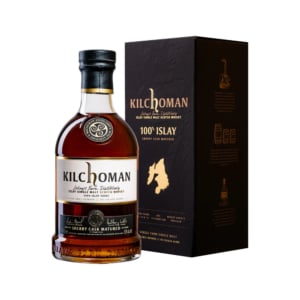
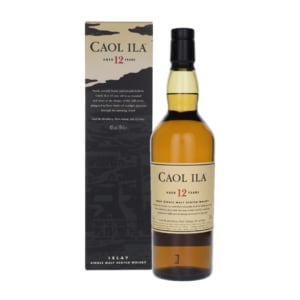
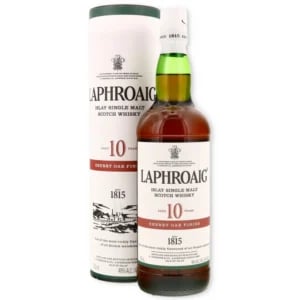
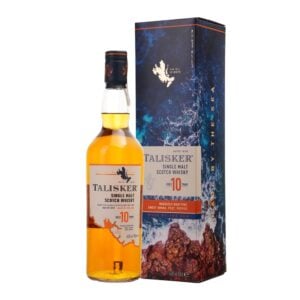
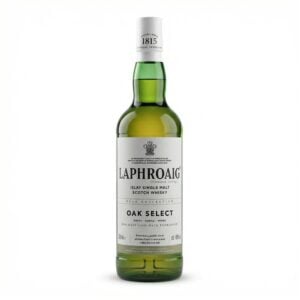
Islay Whisky — A Kingdom of Smoke and Sea Salt in Your Glass
In the world of fine spirits there is a name that sends a shiver of excitement through some and mild dread through others. Islay. This small, wind-battered island off the western coast of Scotland is home to the most distinctive and uncompromising spirits in the world. It is here that a style was born which changed forever the way we perceive the copper “water of life.” When you choose an Islay whisky, you are not simply buying a bottle of alcohol — you are purchasing a ticket to a world dominated by aromas of campfire, seaweed, iodine, and aged leather. This is a region that proves whisky need not be gentle and ingratiating to become the object of a cult following.
Islay — A Small Island That Became the World Capital of Peat
The geography of Islay is the key to understanding its phenomenon. Although it is just one of the many islands of the Inner Hebrides archipelago, its significance to the distilling industry is colossal. The harsh climate, the salty Atlantic breeze, and the island’s specific geological composition have given the local peat a unique character. The peat on Islay is saturated with sea salt, decomposing seaweed, and iodine, which sets it dramatically apart from the inland peat found on the Scottish mainland, which is more woody and earthy in nature.
It is precisely this local raw material that became the foundation of the success enjoyed by Islay whisky. For centuries peat was the only available fuel used to dry malted barley. What began as a necessity born of the absence of coal or timber gradually became the most sought-after flavour characteristic of all. Today, the distilleries of Islay are places of pilgrimage, where tradition is married to craft and every successive bottle tells the story of humanity’s struggle with the elements.
Peated Whisky — What Does It Mean in Practice, and Why Does It Provoke Such Strong Reactions?
For someone encountering the term “peated whisky” for the first time, the experience can be startling. Initial associations frequently include the smell of burnt rubber, tarmac, a pharmacy, or smoked ham. Why, then, do millions of people across the globe consider peated whisky to represent the pinnacle of refinement? The answer lies in complexity. Beneath the layers of smoke and ash there are extraordinarily rich fruity, citrus, and even floral notes waiting to be discovered.
A great peated whisky is one in which the smoke is not the sole performer, but rather the backdrop against which other aromas play. The intensity of peating is measured in PPM (Phenol Parts Per Million). Some expressions contain just a handful of PPM; others, the most extreme, exceed one hundred, delivering sensations that can be compared to directly inhaling the smoke from a bonfire. Yet it is precisely this uncompromising quality that forges such a powerful bond between peated whisky and the consumer — either one loves it from the very first sip, or it takes many years to appreciate its intricate structure.
How Is Peated Whisky Made? The Secrets of the Malt-Drying Process
All the magic begins even before distillation takes place. To produce peated whisky, the barley must first be steeped in water so that it begins to germinate. At precisely the right moment this process must be interrupted and the grain dried. In the traditional distilleries of Islay this is done in special ovens known as kilns, beneath whose perforated floor peat is burned. The dense, aromatic smoke penetrates the damp malt, depositing chemical compounds called phenols on its surface.
The duration of exposure to smoke, and the density of the peat fuel used, determine just how peated the whisky will ultimately be. Interestingly, the distillation process itself in copper pot stills softens the aroma somewhat, which is why master distillers must control every batch with great precision. It is in these smoky vapours that the soul of the future peated whisky takes shape. The longer the contact with smoke, the more intense and “medicinal” the character of the spirit will be on tasting.
Islay Whisky: The Legendary Profile of the World’s Smokiest Distilleries
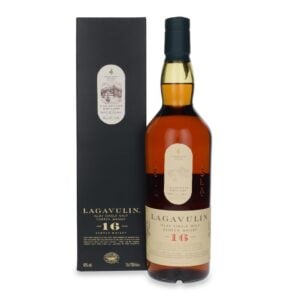
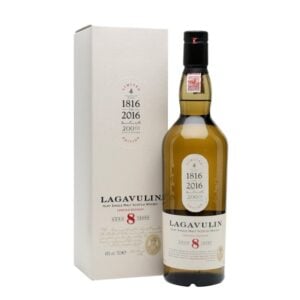
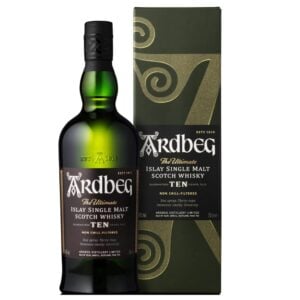
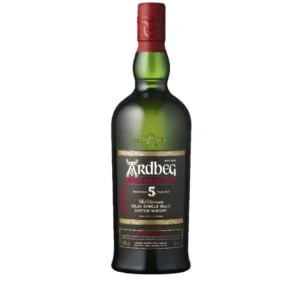
Any discussion of Islay whisky must mention the “great trio” of the island’s southern shore: Ardbeg, Laphroaig, and Lagavulin. It is these three distilleries that defined the style we now associate with the very concept of Islay whisky. Each of them offers a slightly different perspective on smoke. One is exceptionally clean, lemony, and sharply smoky; another has an almost medicinal character, reminiscent of bandages and iodine; whilst the third prizes elegance, dried fruit, and a deep, slowly developing bonfire smoke.
Yet the island is not only about extremes. The northern distilleries offer Islay whisky with a considerably gentler profile — often almost entirely free of peat — concentrating instead on sea salt and citrus. This demonstrates just how varied Islay whisky can be within a single small region. The key is its interaction with the sea: the warehouses in which the casks mature frequently stand right at the water’s edge, and during storms the waves literally strike their walls. As a result, every bottle of Islay whisky is saturated with salt and seaweed, lending it that irreproducible, bracing quality.
Peated Whisky from Other Scottish Regions and Beyond: Where Else to Find Smoke?
Although Islay remains the undisputed capital, peated whisky is produced in other corners of the globe as well. Within Scotland itself, smoky expressions can be found in the Highlands and the Islands, though the peat there tends to display a different profile — more forested, heathery, and dry. Increasingly, Irish peated whiskey is also making its presence felt on the shelves. Although Ireland is associated primarily with triple distillation and a gentle flavour, history shows that peat was once used there as widely as in Scotland, and modern craft distilleries are enthusiastically returning to those roots.
An interesting phenomenon is also the emergence of peated whiskey from new markets such as Japan, India, and even various European countries. Japanese peated whiskey is often characterised by extraordinary precision and purity, whilst versions from India can be surprisingly intense due to the rapid maturation process in a hot climate. Whatever their country of origin, all peated whiskies share one thing in common — the pursuit of that primal, smoky note which so captivates the palates of contemporary connoisseurs. However, it is Islay that remains the gold standard against which every new peated release on the market is measured.
Peated Whisky vs Peated Whiskey — Does the Spelling Matter?
When browsing online shop listings, customers frequently encounter a difference in spelling: sometimes it is written “peated whisky,” other times “peated whiskey.” Although this may appear to be a simple error to the uninitiated, the letter “e” in fact carries meaningful information about the spirit’s origin. By tradition, Scottish production — including that from the island of Islay — is always “whisky.” If you are looking for products from Ireland or the United States, the label will more commonly read “whiskey.”
It is worth knowing that peated Irish whiskey is currently experiencing something of a renaissance. For years the Irish style was associated exclusively with gentleness and an absence of smoke, but modern craft distilleries are increasingly reaching for peat, creating spirits that represent a fascinating alternative to the Scottish classics. Irish peated whiskey is typically triple-distilled, which means that despite its smoky aroma, its texture remains silkily smooth and creamy. Understanding these nuances enables one to build a collection consciously and to discover just how many different faces peated whisky can present, depending on the country in which it was produced.
How to Taste Peated Whiskies and Uncover Their Full Complexity?
Tasting peated whisky is an art that demands patience. Because of the high phenol content, both the nose and the palate need time to adapt to the intensity of the smoke. The first principle is choosing the right glass — a tulip-shaped tasting glass is essential, so that the smoke does not escape too quickly and the fruity aromas have an opportunity to break through the layer of ash. Resist the urge to plunge your nose deep into the glass on first contact; allow the peated whisky to “breathe” slowly.
Temperature is the next important factor. Peated whiskies are at their finest at room temperature. Avoid ice, which drastically suppresses the smoky character and causes the spirit to fall flat. If the intensity feels too great, add a few drops of water. Water breaks down the structure of the essential oils, often triggering a genuine explosion of new aromas — suddenly, from behind the veil of smoke, notes of vanilla, citrus, or salted caramel may emerge. It is precisely these hidden layers that lead tasters to consider peated whiskies the most fascinating spirits in the world.
Peated Whisky in the Kitchen and Food Pairing
An intriguing trend that is gaining momentum is the pairing of peated whiskies with food. The intense profile of Islay whisky makes it a brilliant partner for dishes that possess a strong character of their own. Peated whisky and oysters is a legendary combination — the salty brine of the spirit and the minerality of the shellfish create a perfect synergy. Smoky aromas pair equally well with mature blue cheeses (such as Roquefort) and with dark chocolate of high cocoa content.
Many chefs also use peated whisky as an ingredient in sauces for grilled meats. A few drops of peated distillate added to a marinade can lend a dish a depth that no spice alone could achieve. Experimenting with peated whisky at the table is an excellent way to enrich an evening tasting and to discover new dimensions of flavour that would remain hidden when drinking the spirit on its own.
Rankings and Prices: The Finest Peated Whiskies in Our Range
A question that arises frequently is: how much should a good bottle cost? Peated whisky is available across a very wide price range. Entry-level editions from Islay of around ten years of age can be acquired for a very reasonable sum, yet they already deliver the full peated experience. If, however, you are searching for something unique, limited editions or Cask Strength versions — bottled at cask strength without dilution — will cost more, but will also deliver considerably more concentrated sensations.
In our sales rankings, the classics from the southern part of Islay remain perennial favourites. However, growing interest is also being shown in peated whisky from smaller, independent distilleries, which prioritise natural colour and non-chill filtration. When making your choice, it is worth being guided not only by price, but above all by the level of peating (PPM) — if you are just starting out, choose a peated whisky with a lower smoke level. For veterans, we recommend expressions in which the “peatiness” is almost viscous, filling the entire mouth for long minutes after swallowing.
FAQ — Frequently Asked Questions About Islay and Peated Whiskies
- What gives Islay whisky its characteristic “medicinal” aroma?
This unique combination of iodine, bandage, and sea salt arises from the composition of the local peat. Islay whisky is produced using peat that has for centuries been saturated with seawater and decomposing seaweed. During the malt-drying process, these marine minerals are deposited on the grain, lending the finished spirit its legendary, “pharmacy” profile.
- Does all peated whisky come from the island of Islay?
Although Islay is the undisputed capital of smoke, peated whisky is also produced in other Scottish regions (such as the Highlands), as well as in Japan and India. Moreover, Irish peated whiskey is growing in popularity, combining a smoky character with the silky smoothness typical of triple-distilled Irish spirits.
- What does the abbreviation PPM on a peated whisky label mean?
PPM (Phenol Parts Per Million) is the unit used to measure the level of peating of the malt. The higher the PPM figure, the more intense and smoky the peated whisky will be. Standard editions typically range from 10 to 30 PPM, whilst extreme versions can exceed 100 PPM.
- Should you add water when tasting peated whisky?
Yes — it is an excellent way to uncover the depth of the spirit. An intense peated whisky, once a few drops of water are added, “opens up”: the wall of smoke gives way to reveal hidden fruity, vanilla, or citrus notes. Avoid ice, however, which drastically suppresses the smoky character and shuts down the aromas.
- What food pairs best with peated whisky at the table?
Peated whiskies are brilliant companions for bold, assertive food. Classic pairings include fresh oysters, smoked fish (such as salmon), blue cheeses, and dark chocolate. The smoky profile of the whisky cuts beautifully through fatty and salty flavours, creating a surprisingly harmonious result.
- Why is the price of some Islay whisky bottles significantly higher than others?
Cost is determined above all by the age of the spirit, the rarity of the edition (such as Single Cask or Cask Strength releases), and the reputation of the distillery. Islay whisky from limited series frequently appreciates in collectors’ value, since the process of its creation under traditional island conditions is time-consuming and constrained by the limited production capacity of small distilleries.
Discover the Power of Peat with Fine Spirits
If you are searching for intense, smoky aromas straight from a Scottish island, Fine Spirits is the place created for you. Our range encompasses the most iconic brands from this region, celebrated for their uncompromising character and maritime notes. If your goal is to find the finest Islay whisky in Warsaw, we offer professional advice and a wide choice of bottles. At Fine Spirits, we believe that every sip of whisky from the island of Islay is a journey into the heart of Scotland’s wild nature.
Islay Whisky — Prices and the Best Opportunities in Our Shop
In our range we demonstrate that a smoky flavour profile is accessible on every budget. Browsing the prices of Islay whisky in our catalogue, you will find that we offer both limited collector’s editions and very attractively priced propositions. Our Islay whisky shop takes care to ensure you can enjoy quality without straining your budget:
- For those looking for economical options, we have prepared a section of entry-level Islay whiskies — solid, reliable expressions for everyday enjoyment.
- If your budget allows for a little more, explore our mid-range Islay whiskies — the ideal price bracket for discovering the classic peated icons of Islay.
Summary: Why Should Islay Whisky Have a Place in Your Collection?
To summarise, the world of Islay whisky — and more broadly, of all peated whiskies — is a space for the bold seeker of flavour. These are spirits that permit no indifference. To choose a peated whisky is to choose authenticity and a product whose creation is inseparably bound up with nature, the land, and the smoke of a fire. It is a spirit with a soul and a history, and every bottle from Islay is proof that water and fire can together create something harmonious.
In our shop you will find a wide selection of peated Scotch whiskies and peated whiskies from around the world. We take care to ensure that our range is varied — from gently smoky variants to extreme peated monsters that will satisfy the most demanding connoisseurs. We invite you to explore this fascinating world. Whether you are looking for a gift or wish to broaden your own flavour horizons, a peated whisky will always be a choice that is remembered for a long time. Browse our current selection and find your favourite smoky profile today.