






























Scotch whiskey
9 products


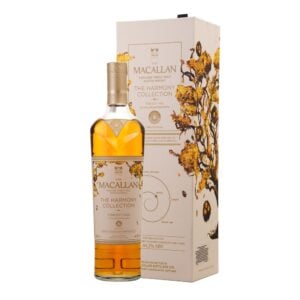
Scotch Whisky — A Complete Guide to Styles, Types, and Flavours
Scotch whisky is a phenomenon that has captivated connoisseurs around the world for centuries. Although the name may seem straightforward, it conceals enormous diversity in styles, categories, and flavours. From delicate, floral blends to intense peated single malts from Islay — Scotch whisky is a world in which everyone can find something for themselves. Importantly, it is also a spirit subject to strict legal regulations — the name “Scotch Whisky” is protected and may only be applied to products that meet the rigorous requirements of Scottish law.
In this article, we will examine Scotch whisky from various perspectives. We will explain why it is sometimes spelled “whisky” and other times “whiskey,” discuss the legal categories of Scotch whisky, present the main flavour styles, offer guidance on choosing a bottle and how to taste it. Fine Spirits in Warsaw has for years been advising whisky lovers in search of the perfect Scotch — regardless of experience level or budget.
Whisky or Whiskey — Where Does the Difference Come From?
Many customers ask: why is it sometimes written “whisky” and other times “whiskey”? Is it the same spirit? The answer is both simple and fascinating. The spelling without the “e” — that is, “whisky” — is the form used in Scotland, Japan, Canada, and most European countries. The spelling with an “e” — “whiskey” — is characteristic of Ireland and the United States. This is not a mistake but a deliberate tradition.
The history of this dichotomy dates back to the end of the nineteenth century. Irish producers, wishing to distinguish their products from Scottish ones (then considered to be of lower quality), added the letter “e” to the name. Americans, who imported whiskey mainly from Ireland, adopted that spelling and have retained it to this day. That is why referring to Scotch as “Scotch whiskey” is technically incorrect — Scottish products are always spelled without the “e.” Some texts in Poland use both variants interchangeably, but within the industry the convention is to use the original spelling of the region of origin.
In other words: “Scotch whisky” is the correct form, while “Scotch whiskey,” although encountered, is incorrect from the standpoint of naming tradition. It is worth paying attention to this when making purchases — authentic Scottish products are always labelled without the “e,” and the label always carries the designation “Scotch Whisky” or simply “Whisky” with the addition of “Product of Scotland.”
A Brief History of Scotch Whisky
The tradition of whisky production in Scotland stretches back more than five centuries. The first documented reference to distillation in Scotland dates from 1494, when the monk Friar John Cor received malt “to make aqua vitae” — the water of life. It is that Gaelic name, “uisge beatha” (pronounced “ooshgie beh-ha”), that gradually contracted into “whisky.”
For centuries, whisky production remained largely the domain of illicit distilleries hiding from heavy taxation. The turning point came in 1823, when Parliament passed the Excise Act, which regulated production and taxation. The following year saw the opening of the first officially licensed distillery — The Glenlivet, which operates without interruption to this day. The nineteenth century also brought the invention of Coffey’s column still (1830), which enabled the mass production of grain whisky and opened the door for blends.
Today, Scotch whisky is worth billions of pounds in exports each year and is one of the United Kingdom’s most important products. There are more than 140 malt distilleries and several grain distilleries in operation. New production facilities are established every year, and traditional distilleries are reclaiming historic sites — such as Brora and Port Ellen, which were revived after decades of silence.
Types of Scotch Whisky — Five Legal Categories
The types of Scotch whisky make for a fascinating subject, because this single region of production offers no fewer than five legally distinct categories. Each has its own character, its own devotees, and its own place in the market. Understanding these distinctions is the foundation of informed purchasing.
Single Malt Scotch Whisky
Single malt is a whisky that comes entirely from one distillery and is made exclusively from malted barley. It is distilled in copper pot stills using the batch method. This is the most prestigious category — each distillery creates its own unique style. Macallan, Glenfiddich, Lagavulin, Glenmorangie, Highland Park, Aberlour — these are names that form the heart of any serious collection.
Single Grain Scotch Whisky
Single grain is a whisky produced at one distillery but made from grains other than malted barley alone — primarily wheat or maize, with the addition of malt. It is distilled in column stills, which yields a significantly lighter, more delicate character. Cameronbridge, Girvan, North British, and Strathclyde are examples of distilleries producing whisky in this category.
Blended Malt Scotch Whisky
Blended malt is a marriage of single malts from two or more distilleries — with no grain whisky added. Master blenders create compositions here that cannot be achieved at a single distillery. Monkey Shoulder, Compass Box The Spice Tree, Big Peat — these are well-known examples. Whiskies in this category often combine the best qualities of different Scottish regions.
Blended Grain Scotch Whisky
Blended grain is a mixture of grain whiskies from two or more distilleries. Very few brands offer such products — Compass Box Hedonism is perhaps the most famous example. The flavour profile is typically delicate, floral, and sweetish, with notes of vanilla and caramel.
Blended Scotch Whisky
Blended Scotch is the classic marriage of malt and grain whiskies from various distilleries. This is the category that built the global popularity of Scotch whisky — Johnnie Walker, Chivas Regal, Ballantine’s, The Famous Grouse, Dewar’s. Master blenders combine dozens of different whiskies to achieve a consistent flavour year after year. Although prestige has shifted toward single malts, blends account for the overwhelming majority of global Scotch whisky sales.
Flavour Styles of Scotch Whiskies
Scotch whiskies can also be classified by flavour style — independently of their legal category. These classifications help in matching a bottle to your preferences and are a common point of reference in discussions among connoisseurs.
Peated Whiskies
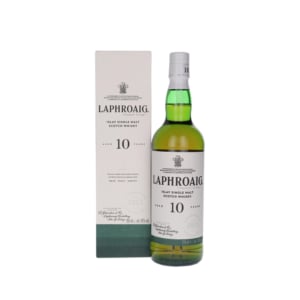
Peated whiskies are a speciality of the island of Islay, though distilleries from other regions produce them too. The characteristic smoky, iodine-medicinal aroma comes from the peat used to dry the malt. Lagavulin 16, Laphroaig 10, Ardbeg 10, Bowmore — these are classics of this category. The intensity of smoke is measured in PPM (parts per million of phenols) — from a few PPM (lightly smoky) to more than 50 PPM (extremely smoky, such as Octomore).
Unpeated Whiskies
Unpeated Scotch whiskies make up the majority of expressions from Speyside, the Lowlands, and a large part of the Highlands. Flavour profiles include sweetness, fruit, honey, vanilla, chocolate, and floral notes. Glenfiddich, The Glenlivet, Aberlour, Glenmorangie — these are classics of this school. Ideal for those who prefer to avoid smoke yet wish to enjoy the complexity of Scotch whisky.
Sherry-Finished Whiskies
Whisky matured in casks that previously held Spanish oloroso sherry (or other styles — Pedro Ximénez, Amontillado, Fino) gains a dark colour and a rich, fruity, spiced, and nutty character. Macallan, Aberlour, Glenfarclas, GlenDronach — these are icons of this style. For many connoisseurs, sherry-finished whisky represents the pinnacle of the Scottish tradition.
Bourbon Cask Whiskies
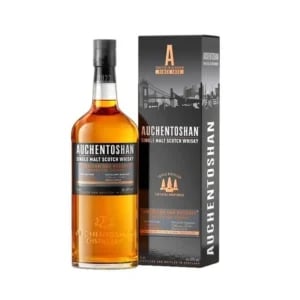
The majority of Scotch whisky matures in casks that previously held American bourbon. These casks are relatively inexpensive and widely available, and they impart light, vanilla, honeyed, and sweetish notes to the whisky. Glenmorangie Original, Auchentoshan American Oak, Glenfiddich 12 — these are examples of whiskies matured classically in ex-bourbon casks.
Cask Strength
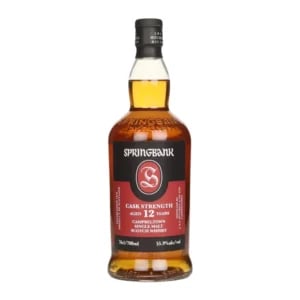
Cask strength whiskies are bottled without dilution with water — at the strength at which they left the cask, typically 50–60% ABV or higher. For experienced connoisseurs, this is the fullest expression, allowing one to experience the whisky in its purest form. Aberlour A’bunadh, Glenfarclas 105, Glenlivet Nadurra — these are classics of this category.
Finished Editions
Many distilleries mature their whisky first in classic casks (usually ex-bourbon) and then transfer it for the final months or years to casks that previously held other spirits — port, sherry, rum, cognac, or Sauternes wine. This gives the whisky an additional layer of flavour. Glenmorangie Quinta Ruban (port), Balvenie DoubleWood (sherry finish), Glenmorangie Lasanta (oloroso) — these are popular expressions in this category.
The Geography of Flavour — How Region Shapes Character
Although a particular flavour style is not reserved for a specific region, geography has a significant influence on the character of Scotch whisky. The five regions officially distinguished in law — Speyside, the Highlands, the Lowlands, Islay, and Campbeltown — each cultivate a typical production style. Speyside is the centre of single malt production, known for elegant, fruity, and sweet profiles. The Highlands offers enormous diversity — from delicate coastal whiskies to fuller, earthier distillates. The Lowlands is renowned for light, floral whiskies, often triple-distilled. Islay is the homeland of peated, smoky distillates. Campbeltown stands out for its salty, oily character. The Islands, although not an official region, offer intriguing notes of sea air and gentle smokiness.
How to Recognise a Good Scotch Whisky
Choosing a good Scotch whisky is not solely a matter of price or brand reputation. It is worth paying attention to several specific aspects that together say more than a label at first glance.
- Age — if a number of years appears on the bottle (e.g. 12, 18, 25), this indicates the age of the youngest whisky used in the bottling. Whisky without a stated age (NAS — No Age Statement) is not necessarily inferior, but requires greater trust in the distillery.
- Alcohol strength — the standard is 40–46% ABV. Cask strength means the strength of the cask (50%+), which is generally a plus for experienced connoisseurs.
- Cask — information on the label about the type of cask (oloroso sherry, port pipe, ex-bourbon) helps predict the flavour profile.
- Natural colour — the designation “natural colour” or “no caramel colouring” means the colour is natural, with no addition of caramel E150a.
- Non-chill filtered — “non-chill filtered” is a sign that the whisky has retained its full flavour and texture.
- Region of origin — an important indication of the typical flavour profile.
The Art of Tasting Scotch Whisky
Tasting Scotch whisky is a pleasure that deepens with experience. A few simple principles allow you to draw the full flavour from any bottle.
Begin with the right glass. The best choice for tasting is a Glencairn — tall, narrowing towards the top, concentrating the aromas. A tumbler is suitable for whisky with ice but not for flavour assessment. The temperature should be room temperature — around 18–22°C. Whisky that is too cold loses its aromas; whisky that is too warm emphasises the alcohol at the expense of subtlety.
After pouring the whisky into the glass, give it a moment to open up. Observe the colour — deep dark tones often indicate a sherry finish, while pale straw suggests a bourbon cask. Nose gently, several times from different distances. The first notes are the most fleeting — alcohol, fruit, flowers. Take a small sip and let the whisky spread across your tongue. Identify the flavours — sweet, bitter, fruity, smoky, spiced. Swallow and observe the finish — this is often the most interesting moment of the tasting.
Adding a few drops of water to a high-strength whisky (cask strength, 50%+) opens up the aromas and reveals notes that would be masked by the alcohol. This is actually recommended for cask strength expressions. Ice cools and suppresses aromas — with fine whiskies, connoisseurs generally avoid it, although it is a matter of personal preference.
Scotch Whisky as a Gift
Scotch whisky makes an excellent gift — both in a business and a personal context. A well-chosen bottle is a gesture that says more than a thousand words to the recipient. In Polish culture, Scotch whisky is a classic choice for important occasions — milestone birthdays, anniversaries, promotions, and the festive season.
When selecting a bottle, it is worth considering the recipient’s preferences. Do they enjoy peated whiskies or prefer delicate Speyside single malts? Do they value classic brands or like to discover new ones? Depending on the answers, one can explore different directions — from Macallan 12 Double Cask (a universally excellent premium gift), through Lagavulin 16 (for lovers of smoke) and Glenfiddich 18 (a picture of elegance), to Johnnie Walker Blue Label (for those who appreciate the prestige of fine blends).
Packaging matters — many premium Scotch whiskies are sold in elegant boxes, wooden cases, and handsome cartons. This extra touch elevates the gift. Professional gift wrapping and a personalised card with a dedication are the finishing details that make a lasting impression.
The Most Common Mistakes When Buying Scotch Whisky
When purchasing Scotch whisky it is worth avoiding several typical mistakes made by beginners. Awareness of these pitfalls allows one to buy more wisely and with greater satisfaction.
- Buying only the oldest whisky — age is an important but not the sole indicator of quality. Some younger whiskies (e.g. cask strength expressions) can impress far more than significantly older ones.
- Going solely by brand — famous names can be expensive, while lesser-known distilleries often offer an outstanding value-for-money ratio.
- Overlooking the region — choosing without understanding the region can end in disappointment (e.g. buying a peated whisky for someone who dislikes smoke).
- Buying without advice — a salesperson in a specialist shop can recommend the ideal bottle in just a few minutes, saving the customer both time and money.
- Ignoring storage conditions — buying from a place where bottles stand in sunlight or at an inappropriate temperature may mean a product whose quality has deteriorated.
Scotch Whisky Price — An Overview of Price Ranges
The price of Scotch whisky depends on many factors — the age of the spirit, the reputation of the distillery, the type of cask, the limited nature of the release, and the shop’s pricing policy. For many customers, price is the first criterion of choice, so it is worth knowing the typical price ranges found in Polish shops.
Scotch whisky up to PLN 100 consists primarily of standard blends — Famous Grouse, Grant’s Triple Wood, Ballantine’s Finest, William Lawson’s. These are everyday whiskies, good for cocktails, mixing with sparkling water, or casual drinking with ice. In this category one should not look for depth of flavour, but for a reliable product at an accessible price.
Scotch whisky up to PLN 150 opens up interesting possibilities — Johnnie Walker Black Label (a classic 12-year-old blend), Ballantine’s 12, Chivas Regal 12, Famous Grouse Smoky Black. This is the level at which conscious tasting of premium blends begins. This price bracket also includes younger single malts from lesser-known distilleries.
Above PLN 150 begins the world of classic single malts — Glenfiddich 12, The Glenlivet 12, Aberlour 10, Auchentoshan 12, Highland Park 12. This is the range in which to take your first steps into the world of single malt Scotch. Fine Spirits in Warsaw offers a full range of expressions from every price bracket — with expert advice that helps you choose the optimal value regardless of your budget.
Fine Spirits — Scotch Whisky in Warsaw at Its Finest
Fine Spirits is a shop that has for years held an important place on Warsaw’s map of premium spirits lovers. A location in the heart of the capital, expert advice, an extensive range of Scotch whisky, and a convenient online shop — these are the strengths that keep customers coming back and recommending the shop to others.
The Fine Spirits range encompasses hundreds of Scotch whisky expressions — single malts from each of Scotland’s five regions, classic blends, cask strength editions, sherry-finished, bourbon-aged, and limited anniversary releases. Every bottle comes from a legal, verified source, and ongoing cooperation with importers and directly with distilleries gives customers the assurance of authenticity and proper storage conditions.
The experienced advisers at Fine Spirits are true enthusiasts who continually expand their knowledge through tastings, training courses, and direct contacts with producers. Every customer — regardless of experience level — can count on honest, tailored advice. Fine Spirits is a place where buying Scotch whisky becomes a pleasure, not merely a transaction. Whether you are looking for your first bottle, a gift for a special occasion, or a collector’s gem — Fine Spirits welcomes you to its flagship salon in central Warsaw and to its website, available at any hour of the day or night.
FAQ — Frequently Asked Questions About Scotch Whisky
What is the difference between whisky and whiskey?
It is purely a matter of spelling related to the region of production. Scotland, Japan, Canada, and most of the world use the form “whisky” (without the “e”). Ireland and the United States use “whiskey” (with the “e”). The spirit itself is in both cases a grain distillate matured in wooden casks, but the production traditions in each country differ significantly. Authentic Scotch whisky is always spelled without the “e.”
Is older whisky always better?
Not necessarily. Age is an important but not the sole indicator of quality. Longer maturation gives whisky greater depth and complexity, and often more cask notes, but sometimes an older whisky can be too woody, bitter, or overly tannic. Some 12-year-old single malts are more satisfying on the palate than weaker 25-year-olds. What counts is the quality of the casks, the distillation profile, and the skill of the master blender — not necessarily the number on the label.
Is single malt whisky always better than a blend?
No. This is a common myth. The finest blends — Johnnie Walker Blue Label, Chivas Regal 25, Ballantine’s 30, Royal Salute 21 — can impress no less than outstanding single malts. A great blend is the result of a master blender’s artistry in combining dozens of different whiskies into a coherent composition. Single malts offer the character of a specific distillery; blends offer harmony and a balanced profile. These are different approaches, not different levels of quality.
Can you add water to Scotch whisky?
Yes, and what is more — it is often recommended. A few drops of water added to a high-strength whisky (cask strength, 50%+) opens up the aromas and reveals notes that would be masked by the alcohol. Most master tasters add water during professional assessments. It is important to use still mineral water with a low mineral content, or filtered water — tap water can introduce unwanted flavours. Ice, on the other hand, suppresses aromas, so with fine whiskies connoisseurs generally avoid it, though it is a matter of personal preference.
How long can an opened bottle of Scotch whisky be stored?
An opened bottle is best consumed within a few months to a year. Unlike wine, whisky does not spoil quickly, but the air inside the bottle affects the flavour profile — bottles with low fill levels lose their qualities faster than full ones. If less than one third of the whisky remains, some connoisseurs transfer it to a smaller container to minimise contact with oxygen. The bottle should stand upright, in a cool, dark place at a stable temperature of 15–20°C.
Can Scotch whisky be a good gift for a woman?
Absolutely — a well-chosen bottle is an elegant gift regardless of the recipient’s gender. The world of Scotch whisky encompasses all flavour styles, from delicate, floral Lowlands expressions through fruity sherry-finished whiskies to intense peated Islay malts. What matters is matching the gift to the recipient’s taste, not stereotypical assumptions. More and more women are discovering the world of Scotch, and the industry is seeing a growing number of female master distillers and blenders.
What does NAS mean on a label?
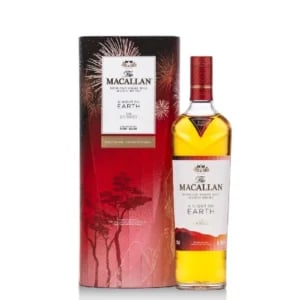
NAS stands for “No Age Statement” — whisky without a declared age. This does not mean the whisky is young or of lower quality — it often contains a blend of whiskies of various ages, including older vintages. Distilleries choose this form of bottling when they wish to focus on the flavour profile rather than the number of years. Many highly regarded products (Macallan Quest, Glenmorangie Signet, Talisker Storm) are NAS whiskies.
Is it worth investing in Scotch whisky?
It can be an interesting alternative investment, but it requires knowledge and patience. The highest price increases are seen in bottles from closed distilleries (Port Ellen, Brora, Rosebank), older editions of leading brands, and limited releases. Investing in whisky is a long-term game, not a route to quick profit. The key factors are: certainty of the purchase source, proper storage, and the condition of the bottle (label, cork, fill level).
Why can two bottles of the same whisky cost different amounts in different shops?
Differences arise from the shop’s margin, logistics costs, the terms of agreements with distributors, and current promotions. Sometimes the difference can be as much as 20–30%. It is worth comparing offers from several shops, but at the same time bearing in mind the certainty of the product’s provenance — the cheapest bottle from an unverified source may turn out to be a counterfeit or a poorly stored specimen. Specialist whisky shops such as Fine Spirits offer a fair pricing policy and a full guarantee of authenticity.
Summary
Scotch whisky is a fascinating world in which everyone can find something for themselves. Five legal categories, five regions, dozens of flavour styles, hundreds of distilleries — a richness that could last a lifetime of discovery. Whether you are taking your first steps in the world of Scotch or building a mature collection, Scotch whisky is a category to which it is always worth returning.
In every bottle there is a story — a tale of a distillery, a region, the people, and the tradition. Every sip is a small piece of Scotland: its landscapes, its climate, its heritage. May every bottle you open be a celebration of flavour, history, and passion. And if you are looking for a place to choose wisely — Fine Spirits in Warsaw welcomes you to its flagship shop and online store.