







































Japanese Whiskey
13 products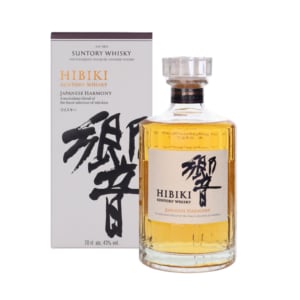

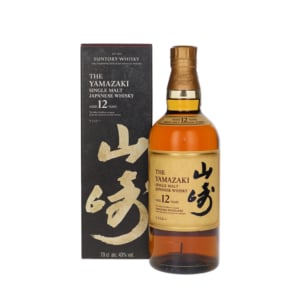
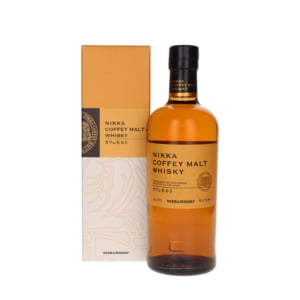
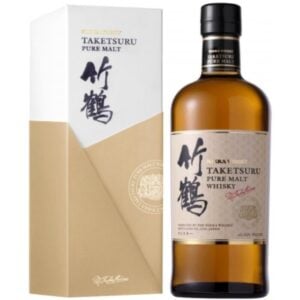
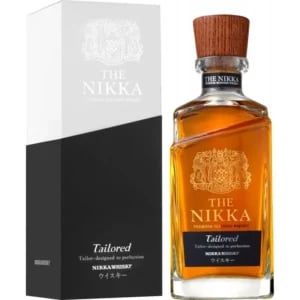
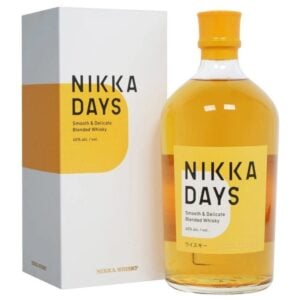
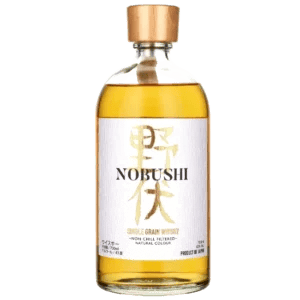
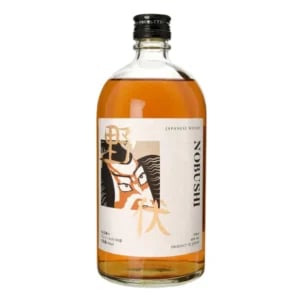
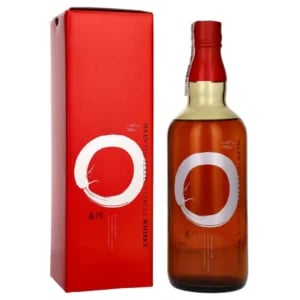
Japanese Whisky — Elegance, Precision, and Harmony from the Land of the Rising Sun
Over the past two decades the global map of fine spirits has undergone a profound transformation, with Japanese whisky at its very centre. As recently as the end of the twentieth century, spirits from the Land of the Rising Sun were treated as an exotic curiosity, the preserve of the domestic market. Today the picture could not be more different — Japanese whisky is a byword for prestige, and collectors are prepared to pay fortunes for it at the world’s greatest auction houses. This success is no accident but the result of a unique fusion of Scottish tradition with the Japanese philosophy of striving for absolute perfection, known as kaizen. Every bottle bearing a Japanese label is the fruit of the titanic labour of master distillers who have proved that they are capable not only of emulating Western models but of surpassing them. The very name Japanese whisky has become a promise of extraordinary smoothness, purity of profile, and a balance that is simply not to be found in any other region of production.
What Characterises and Distinguishes Authentic Japanese Whisky?
Understanding the phenomenon of Japanese whisky requires an analysis of the specific conditions in which it is created. Although the technology is rooted in classic copper pot stills, the Japanese school has introduced an almost surgical precision into the distillation process. Japanese whisky distinguishes itself above all through a remarkable clarity of flavour. This arises from the fact that Japanese distilleries possess an enormous variety of still shapes and sizes within a single facility, enabling them to create an infinite palette of distillates. Furthermore, Japanese whisky draws on crystal-clear water filtered through volcanic rock, which imparts a natural softness from the very outset.
The climate, too, plays a significant role — the wide temperature fluctuations found in Japan make the interaction between the spirit and the wood considerably more intense than in cool Scotland. As a result, even younger Japanese whisky possesses a depth and character that in Europe is achieved only after many more years of maturation. It is precisely this intensity combined with lightness that makes Japanese whisky so coveted by connoisseurs.
Japanese Whisky vs Scotch — The Key Differences in Production
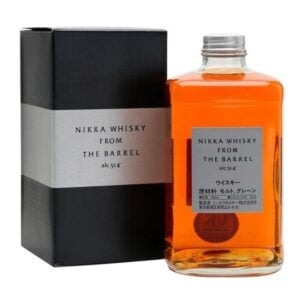
When comparing Japanese whisky to its Scottish forebears, the most striking difference lies in the philosophy of blending. In Scotland, distilleries exchange casks with one another to create blends. In Japan, producers such as Suntory and Nikka must rely exclusively on their own resources. This necessity forced upon them an unparalleled creativity and precision — every Japanese whisky must be a complete work of art created within a single company.
As a result, Japanese whiskies are regarded as more refined, less peated, and free of aggressive alcoholic punch. The Japanese have mastered the removal of unwanted fractions during distillation, giving their whiskies a crystalline profile. Whilst Scotland prizes rawness and tradition, Japanese whisky prizes elegance and harmony — a quality that ideally suits the tastes of contemporary consumers who seek subtlety rather than sheer power.
Grain Whisky and Single Malt — The Diversity of the Japanese Art of Blending
Within the rich portfolio of Japanese spirits, grain whisky occupies a central place. Japanese grain whisky is not merely a “filler” but the fully-fledged foundation of the most acclaimed blends. Produced primarily at distilleries such as Chita and Miyagikyo, Japanese grain whisky captivates with notes of honey, fresh fruit, and corn. It is this component that imparts the silky texture for which Japanese blends are celebrated worldwide.
Japanese Single Malt, meanwhile, is a demonstration of strength and diversity — ranging from fruity expressions matured in American oak to heavier, spiced notes resulting from ageing in Mizunara oak. It is the combination of light grain whisky balancing the power of the malt that causes Japanese compositions to be regarded as the most perfectly balanced in the world. Understanding the role played by the grain in creating Japanese whisky allows one to appreciate the artistry of master blenders who can fashion a coherent and beautiful symphony of flavour from the most varied of notes.
Japanese Whisky Rankings — The Best Bottles According to Connoisseurs and Experts
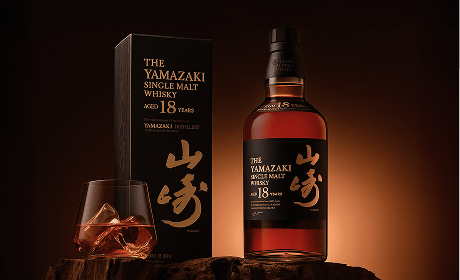
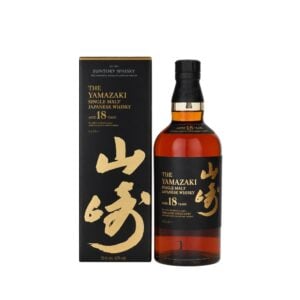
For those wishing to invest in this segment of the market, a professional Japanese whisky ranking is an indispensable guide. At the top of such lists, icons from the industry’s giants appear without fail. Yamazaki, as the country’s first commercial distillery, offers single malts that set the benchmark for the style. Hibiki, meanwhile, is the quintessence of the Japanese blend, where harmony is achieved at a level found nowhere else on earth. When compiling rankings, experts are increasingly drawing attention to smaller players such as Chichibu, whose artisanal expressions achieve extraordinary prices on the secondary market.
Choosing a bottle from the top of the rankings is a guarantee of the highest quality, but also an opportunity to touch a living legend. It should be noted, however, that Japanese spirits are not solely about the great names — they are above all about the reliability of production that means even less well-known expressions can positively surprise with their richness and elegance, outclassing more expensive counterparts from other parts of the world.
Japanese Whisky Prices — What Determines the Cost of a Premium Bottle?
One of the most frequently discussed topics in collectors’ circles is why Japanese whisky prices have risen so dramatically in recent years. The answer lies in a straightforward economic mechanism: enormous, sudden demand collided with a very limited supply. When, some years ago, Japanese distilleries were scaling back production owing to lower interest, nobody anticipated that Japanese whisky would become a global phenomenon. Today, with stocks of aged distillates running low, every bottle bearing an age statement has become a scarce commodity. This rarity is precisely what causes prices for 12, 18, and 25-year-old editions to multiply by hundreds of per cent within just a few seasons.
A further factor influencing cost is the prestige of the brand and the unique production expenses involved. The use of rare Mizunara oak, whose processing is extraordinarily difficult and costly, translates directly into the final price of the product. For many buyers, the high price of Japanese whisky is also an investment signal — limited editions from the Land of the Rising Sun are currently among the most stable assets in the luxury spirits market. Whether you are buying a bottle to taste or to store in your cellar, it is worth understanding that Japanese whisky is a product whose value stems from decades of patience and Japanese perfectionism, and this is duly reflected in the price.
Japanese Spirits in Your Bar: How to Serve Japanese Whisky
Tasting fine spirits from Japan is a process that in that country takes on the character of a ceremony. Japanese whisky requires the right approach to present its full spectrum of aromas. Although many connoisseurs believe Japanese whisky is at its finest served neat — without any additions, at room temperature — Japanese drinking culture has given the world something considerably more refreshing: the Highball. This is a composition in which Japanese whisky is combined with high-quality sparkling water and a generous quantity of ice. The key to success lies in precision: the ice should be crystal clear and the proportions calibrated so that the water does not overwhelm the subtle grain and fruit notes.
When serving Japanese whisky, attention to glassware is important. Thin, elegant thin-glass tumblers allow for a better perception of the drink’s temperature, which is crucial when tasting distillates of such finesse. For those who prefer their whisky with water, the Mizuwari method is recommended — blending the whisky with chilled still water in a ratio of 1:2 or 1:3, which pairs exceptionally well with food. The Japanese have demonstrated that their whisky is a spirit of extraordinary versatility. Whatever the method of serving, the goal is always the celebration of harmony, and Japanese whisky in your bar should be treated with the respect due to a work of art.
Japanese Whisky for Beginners: What to Watch Out for When Buying
The surge in popularity has led to the appearance on the market of many products that merely counterfeit authenticity. For a newcomer seeking to buy their first Japanese whisky, navigating the labels can be difficult. The principal risk comes from so-called “world blends” — spirits imported from Canada or Scotland, bottled in Japan and sold as Japanese whisky. To avoid disappointment, it is worth seeking out brands that are members of the JSLMA (Japan Spirits & Liqueurs Makers Association), which has introduced rigorous standards governing what may legitimately be described as a Japanese product.
In seeking authenticity, it is advisable to rely on established distilleries with a proven reputation. A genuine Japanese whisky should carry clear information about the origin of the distillate. If the price seems suspiciously low compared to the market average, one is likely dealing with a “Japanese-style” product rather than an authentic island distillate. Education in this area is essential if one is to enjoy the true artistry that Japanese whisky offers. Remember that the Japanese approach to quality recognises no shortcuts, and every authentic bottle will offer a complexity that cannot be replicated through clever marketing and an exotically-sounding label.
FAQ — Frequently Asked Questions About Japanese Whisky
In this section we answer the questions most frequently asked by those wishing to deepen their knowledge of spirits from the Land of the Rising Sun.
Why does Japanese whisky often carry no age statement on the bottle?
Owing to enormous demand, stocks of aged distillates have declined dramatically. As a result, producers increasingly offer NAS (No Age Statement) editions, focusing on the flavour profile rather than the number of years. Such Japanese whisky frequently combines younger, more vibrant distillates with older ones, enabling the desired harmony to be achieved despite the absence of an age declaration.
What is the current price range for Japanese whisky?
Entry-level, authentic blends can be found at a very accessible price point. For Single Malts with an age statement (such as 12-year-old expressions), one naturally pays considerably more, and prices rise steeply for older and more limited releases. Bear in mind that Japanese whisky pricing is strongly influenced by global trends and the rarity of the specific edition.
How does Japanese whisky differ from Scotch?
The principal distinguishing feature is the pursuit of balance. Japanese whiskies are typically less aggressive, more floral, and more precisely composed. The Japanese also use different types of yeast and casks (such as Mizunara oak), which imparts a unique aroma of sandalwood and incense rarely encountered in Scotland.
Do the terms Japanese whiskey and Japanese whisky mean the same thing?
Yes — they refer to the same category. Japanese producers follow the Scottish convention and use the spelling “whisky” (without the “e”). In search results and everyday speech, however, the form “Japanese whiskey” also appears frequently. Both forms are used to facilitate communication with customers across different linguistic preferences.
Which brands should appear in every Japanese whisky ranking?
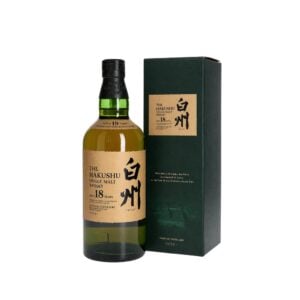
The undisputed leaders are Yamazaki, Hibiki, Hakushu, and Nikka (Yoichi and Miyagikyo). In every credible Japanese whisky ranking these names appear at the top as the benchmarks of quality and Japanese style.
Is Japanese whisky a suitable gift?
Absolutely. Given the aesthetic quality of the packaging and the prestige that a Japanese brand conveys, it is one of the most coveted gifts among lovers of premium spirits. In choosing a Japanese whisky, you are presenting something far more than just a drink — you are presenting a symbol of elegance and perfection.
Discover the Artistry of the Land of the Rising Sun with Fine Spirits
At Fine Spirits we are committed to excellence, which is why our range could not be without spirits from Japan — the country that has dominated the world’s rankings in recent years. Japanese whisky is celebrated for its extraordinary precision of execution, its balance, and the purity of its flavour profile. If you are looking for authentic Japanese whisky in Warsaw, our flagship salon stocks carefully selected bottles from the most prestigious distilleries. Fine Spirits is the ideal destination for those seeking elegance and harmony sealed in glass.
Japanese Whisky — Prices and Availability in Our Shop
Wondering how pricing in the Japanese whisky category looks in practice? Although many Japanese expressions command remarkable sums, our Japanese whisky shop endeavours to offer proposals for every enthusiast of premium spirits:
- Looking for an intriguing introduction to the world of oriental flavours? Browse our entry-level Japanese whisky selection — an ideal first step into this extraordinary category.
- In the mid-range bracket you will find carefully chosen blends and smaller expressions that make a perfect gift or a truly special addition to a home collection.
Summary: Why Choose Japanese Whisky?
To sum up, the world of Japanese distillates is a place where tradition meets an almost futuristic precision. By choosing Japanese whisky, you are opting for a product that has passed through a rigorous selection process and been refined in every last detail. These are spirits that do not shout their strength, but whisper of harmony, serenity, and the beauty of Japan’s natural world. Although the price of Japanese whisky can be a challenge, the experience of tasting an authentic single malt or a masterfully composed blend is worth every penny spent.
We invite you to discover our range, in which every bottle — from the light and fresh expressions to the powerful and complex compositions matured in Mizunara oak — is waiting to tell you its story. Whether you are searching for a bottle to add to your collection or wish to experience the magic of Japanese whisky for the very first time, you are in the right place. Discover the elegance of the Land of the Rising Sun in your glass and see for yourself why Japanese whisky has become the defining icon of modern luxury. Your adventure with Japanese perfectionism begins here.