










Bourbon
14 products
 -10,50 zł
 -16,60 zł
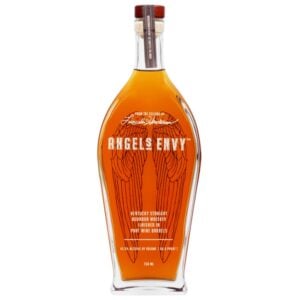
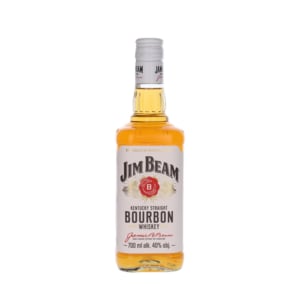
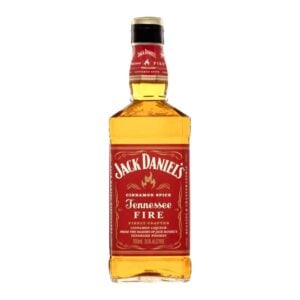
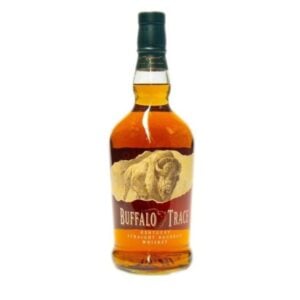
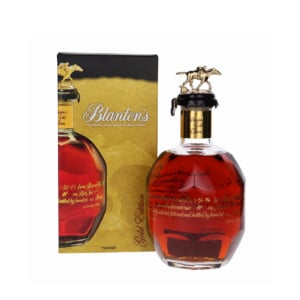
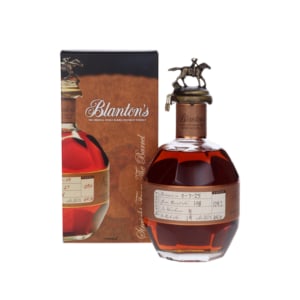
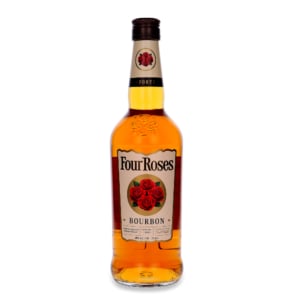
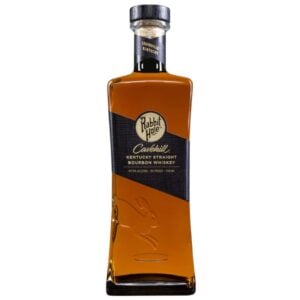
Bourbon — An American Legend in Your Glass
In the world of fine distillates, few spirits evoke such unambiguous associations with freedom, tradition, and a specific place on the map as bourbon. Although to the uninitiated every dark spirit in a bottle may look much the same, American bourbon is a separate, rigorously protected category that has been winning over the palates of connoisseurs around the world for decades. It is a drink born of the needs of settlers, which evolved alongside the history of the United States and ultimately became that country’s national treasure. In choosing bourbon, one engages with a product that is the result of the specific microclimate of Kentucky, a unique corn-based recipe, and an uncompromising set of production rules that guarantee the highest quality in every drop.
Bourbon vs Whisky — The Key Differences and Similarities Across Continents
One of the questions that most frequently arises among those beginning their journey with spirits is what the relationship is between the terms bourbon and whisky. The simplest definition, often repeated by master distillers from Kentucky, runs as follows: every bourbon is a whisky, but not every whisky is a bourbon. To understand this distinction, one must look at the strict legal requirements. Whereas Scotch whisky is based primarily on barley, the foundation of bourbon must be corn — its share of the mash bill cannot fall below 51 per cent. It is precisely this ingredient that gives the spirit its characteristic sweetness, so highly prized by lovers of American distillates.
A further fundamental difference when comparing bourbon and whisky concerns the method of ageing. Whilst in Europe casks are frequently reused many times over, bourbon must mature exclusively in new, freshly charred American oak barrels. This makes the interaction between the spirit and the wood considerably more intense, producing the deep colour and the rich aromas of vanilla and caramel. Furthermore, bourbon may contain no added colouring agents or flavour enhancers — everything experienced in the glass originates solely from the grain, the water, and the wood. In this respect, bourbon always stands out as the spirit with the more natural and unadulterated production process when it comes to additives.
The History of American Bourbon: From Frontier Settlers to the National Spirit of the USA
The story of how bourbon came to be stretches back to the eighteenth century, when immigrants from Ireland and Scotland began to settle the fertile lands of what is now the state of Kentucky. They brought with them a knowledge of distillation, but quickly discovered that barley did not grow as well there as in their homelands. They turned instead to the local grain — corn. The name bourbon most likely derives from Bourbon County in Kentucky, which was itself named in honour of the French royal dynasty in gratitude for France’s assistance during the War of Independence. It was from there that flatboats laden with barrels of spirit floated down the Ohio River towards New Orleans, earning along the way a reputation as a drink of exceptionally smooth and pleasant flavour.
Over the centuries bourbon passed through numerous transformations, surviving Prohibition before being officially recognised by the US Congress in 1964 as a “distinctive product of the United States.” This means that no other country in the world may produce a spirit bearing this name. Although today it is associated with luxury and prestige, its roots are firmly embedded in the artisanal work of farmers. This heritage means that in drinking bourbon one communes with a legacy that shaped the identity of an entire continent, and every brand available on the market today carries within it a fragment of that fascinating, pioneering tradition.
Characteristics — Bourbon Whiskey and the Strict Rules of Its Production
For a spirit to proudly bear the name bourbon whiskey, it must satisfy a series of restrictive conditions that rank among the most exacting in the entire spirits industry. First, it must be produced within the United States (although 95 per cent of production comes from Kentucky, it may technically be made in any state). Second, the distillate may not be placed into casks at a strength greater than 62.5% ABV, and must be bottled at a minimum of 40% ABV. These figures are of enormous significance — the lower barrel-entry proof allows for better extraction of aromas from the wood, which defines the final profile of bourbon whiskey.
One of the most important characteristics is that absolutely nothing may be added to bourbon except water (for the purpose of reducing strength). In the case of many other whiskies, the use of caramel colouring to standardise colour is permitted — here it is strictly forbidden. The deep, amber shade possessed by every bourbon whiskey is owed entirely to the time spent in charred oak. This makes it one of the most honest and transparent choices for a consumer who wants to be certain that what they see is the result of natural chemical processes taking place inside the cask.
Types of American Bourbon: Small Batch, Single Barrel, and Cask Strength
The world of bourbon whiskey offers considerably more than simply the standard bottles familiar from advertisements. For connoisseurs, the real adventure begins with the special designations. “Single Barrel” denotes a spirit drawn from one specific cask, selected by the master distiller on account of its exceptional character. “Small Batch,” on the other hand, is a composition of several or perhaps a dozen carefully selected barrels. These variants make bourbon a unique product, one of greater depth and more complex bouquet than mass-market editions.
For those interested in bourbon in its purest form, it is worth seeking out the designations “Cask Strength” or “Barrel Proof.” This means the spirit has not been diluted with water before bottling and reaches the consumer at the same strength it held in the cask. Tasting such a bourbon is an intense experience, full of notes of warming spice, dark chocolate, and tobacco. It also allows the consumer to experiment with water and discover how the flavour profile changes as the spirit is gradually diluted. Each of these variants makes the category extraordinarily varied, capable of surprising even the most demanding palates.
Bourbon Prices and Availability: How Much Should You Pay for a Good Bottle?
When deciding to purchase an American spirit, one of the first questions that arises is what a good bourbon should cost. On the market, the range of prices is considerable, driven by the diversity of brands and the logistics of importing from across the Atlantic. Entry-level, solid expressions — ideal for cocktails or casual tasting on ice — start at around £15–25. In this price bracket one receives a product of high consistency and a classic vanilla-caramel profile.
If, however, the palate is seeking something more, one must be prepared to spend more. In this higher price range one finds “small batch” versions and high-rye expressions that offer a spicier and more complex character. It is worth bearing in mind that bourbon pricing often reflects the time spent in the cask — although the law requires no minimum ageing period (beyond the “Straight” designation), the majority of premium products mature for between six and twelve years. By investing in a more expensive bottle, one is paying for depth, a denser texture, and a long, evolving finish that is simply not found in budget offerings.
What to Know About Bourbon: Practical Advice for Connoisseurs
Before opening your first bottle, it is worth absorbing a few facts that will make the bourbon tasting experience more complete. Above all, pay attention to the mash bill — the grain composition. Bourbon is not only corn. The remaining 49 per cent of the mash is typically made up of rye (which adds spice), malted barley (which aids fermentation), or wheat. If your bourbon is described as a “wheated bourbon,” expect an exceptionally gentle, bread-like, and sweet flavour. A high rye content, by contrast, will make the spirit peppery and dry.
The next consideration is the choice of glass. Although Hollywood films have accustomed us to seeing bourbon served in short, thick-bottomed tumblers, professional tasting should ideally take place in a tulip-shaped glass such as a Glencairn. Thanks to the narrowing at the top, the aromas of caramel, oak, and spice are concentrated, allowing the nose to detect the subtle differences between individual brands. Bear in mind also that bourbon dislikes being chilled drastically — excessively low temperatures kill the natural sweetness of the corn. If you must use ice, choose one large cube or a whisky stone, which will not dilute the spirit too rapidly.
Bourbon Whiskey Prices — Are Limited Editions a Good Investment?
In recent years the American whiskey market has experienced something of a siege from collectors, with the result that the prices of limited-edition bourbons can be staggering. Bottles from cult distilleries, released once a year in short runs, become objects of desire at auction, achieving values many times higher than their retail price. For those building a home bar with investment in mind, bourbon whiskey pricing is an indicator of prestige and the rarity of the distillates used.
Investing in a rare bourbon requires knowledge, however. The most sought-after expressions are single barrel releases from specific vintages and “antique collection” editions. It is worth remembering that in the case of such unique items, the price reflects not only the quality of the liquid but also the legend of the brand. If you are planning an investment purchase, look for bottles of high strength (cask strength) with a clear age statement. Even if you decide not to sell them, in a few years you will own a product in your collection that is no longer available on the primary market — a considerable value in itself for any lover of fine spirits.
FAQ — Frequently Asked Questions About Bourbon
In this section we have gathered the most common questions from customers searching for the ideal American spirit.
Is every bourbon a whiskey?
Yes, technically speaking, every bourbon is a type of whiskey, since it is produced by distilling a grain mash. However, owing to the unique legal requirements in the United States (a minimum of 51 per cent corn, new charred barrels), it is treated as a separate category. One might say that bourbon is the most rigorously protected style of American whiskey.
What is the best way to drink bourbon?
It depends on your preferences and the quality of the bottle. A standard bourbon is an ideal base for cocktails such as an Old Fashioned, a Manhattan, or a Whiskey Sour. If you have a premium bottle in hand, however, try it neat at room temperature first. If the strength feels too intense, add a few drops of water — this will “open” the spirit and release the vanilla aromas.
What is the average price for a solid bottle of bourbon?
A good-quality bourbon typically starts at around £20–30. At this price point you receive a product from a reputable producer that has matured for at least four years and possesses a classic, rich flavour profile.
How does bourbon differ from Tennessee Whiskey?
This is a very common question. Although Tennessee Whiskey technically meets all the criteria to be called bourbon, its producers apply an additional production step known as the Lincoln County Process. This involves filtering the fresh distillate through a thick layer of sugar maple charcoal. As a result, Tennessee Whiskey is generally smoother and has a somewhat different, “cleaner” profile than classic Kentucky bourbon.
Can bourbon only be produced in Kentucky?
No — this is a widespread myth. Although Kentucky is the heart of the industry and accounts for the majority of world production, bourbon whiskey may legally be produced anywhere within the United States, provided all requirements concerning the mash bill and the casks are met.
How long must bourbon age?
Surprisingly, the law sets no minimum ageing period for standard bourbon (it may spend as little as a few months in the cask). However, for a product to be designated “Straight Bourbon,” it must age for a minimum of two years. If no age statement appears on the bottle, this indicates that the spirit is at least four years old.
The Fine Spirits Offer — Your American Classic
At Fine Spirits we select with passion the spirits that define the character of American distilling. Our bourbon range spans a wide spectrum of flavours — from sweet corn and vanilla to intense notes of oak and warming spice. If your goal is to find the finest bourbon in Warsaw, our flagship salon stocks both well-known brands and niche small batch editions. Fine Spirits is your guarantee of authenticity and the highest quality, certain to satisfy every lover of whiskey from Kentucky and beyond.
Bourbon — Prices and the Best Selection in Our Shop
Wondering how much a good American spirit costs? In our range we ensure that bourbon pricing is always attractive and competitive. Our bourbon shop is a place where quality meets accessibility, with products at every price point:
- Looking for a reliable everyday expression or a base for classic cocktails? Browse our entry-level bourbon selection — solid, flavourful bottles that deliver every time.
- Seeking a richer flavour profile or a bottle to give as a gift? Our mid-range bourbon proposals are the price bracket where acclaimed distilleries of excellent reputation hold court.
Summary: Why Choose American Bourbon?
To sum up, the world of American distillates is a space filled with warmth, sweetness, and the fascinating history of pioneers. By choosing bourbon, you are placing your trust in a product that is the result of rigorous standards and the passion of generations of master distillers. Whether your goal is to find a bottle for an evening’s relaxation or you are searching for a luxury gift, this category offers a quality-to-price ratio found nowhere else.
We invite you to explore our range, where every bourbon has been carefully selected to represent the very finest that America has to offer. From sweet, corn-forward classics to bold and peppery rye-heavy expressions — here you will find the spirit that fits your tastes perfectly. Remember that every sip is a journey to sun-drenched Kentucky, where time moves a little more slowly and oak and corn form the most perfectly matched partnership in the world of fine spirits. Discover your favourite profile and enjoy a flavour that has become a legend.