



























Irish — Single Malt
4 products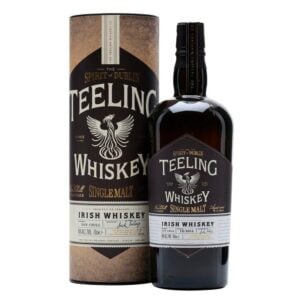
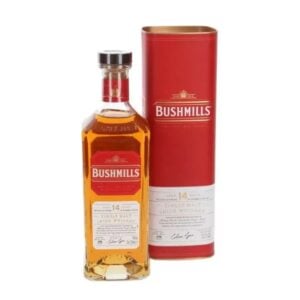 -17,00 zł
Irish Single Malt Whiskey — Noble Flavour and Tradition from the Emerald Isle
In the world of fine distillates, few categories have undergone as spectacular a renaissance in recent years as Irish whiskey. Although for decades the single malt market was dominated by the Scots, the eyes of the entire world are once again turning to Ireland. It is here, on the green hillsides and in the modern urban distilleries of Dublin, that spirits are being created which combine historical heritage with contemporary innovation. To choose a single malt whiskey is to engage with the purest form of barley distillate — the fruit of the work of one specific distillery. It is precisely this uniqueness and focus on quality that makes Irish single malt whiskey an increasingly frequent choice for those who seek in their spirit not only strength, but above all a compelling story about the place from which it came.
Irish Whiskey — What Makes the Single Malt Category So Exceptional?
Understanding the phenomenon enjoyed by contemporary Irish whiskey requires clarifying exactly what is meant by the term “Single Malt.” It is an elite category, subject to rigorous regulations. Every bottle designated as a single malt whiskey must be produced entirely from malted barley, distilled in copper pot stills, and — most importantly — must come from a single distillery. It is this last condition that determines the spirit’s uniqueness. Unlike blended whiskies, where the Master Blender strives to achieve a consistent, averaged profile, a single malt whiskey is a manifesto of the character of a specific place — of the hardness of the local water and the distinctive methods of its distillers. It is an uncompromising spirit that truly gives expression to the soul of its region.
Irish Whiskey — History and the Revival of the Single Malt Tradition
Any account of this noble spirit must include the story of its remarkable journey through the centuries. Irish whiskey has roots stretching back to the Middle Ages, and the earliest monks on the island were distilling aqua vitae as far back as the sixth century. By the nineteenth century, Ireland was the undisputed world leader, and Dublin’s distilleries were considered the largest and most modern on the globe. A series of calamitous events, however — a trade war with Britain, Prohibition in the United States, and civil conflict — brought the industry to the brink of collapse. For a long time, Irish single malt was a rarity, ceding ground to mass-produced blends.
Today, however, we are witnessing a remarkable return to roots. A new generation of distillers is proudly reaching for the old recipes, and single malt Irish whiskey is once again gracing the salons and the finest bars of the world, proving that quality always defends itself against the passage of time.
Irish Whiskey — Types and the Specifics of Production on the Emerald Isle
When one analyses the range of available expressions, Irish whiskey distinguishes itself from the global competition through a specific approach to the craft of distillation. Most people associate Ireland with triple distillation, which is one of the island’s calling cards. It is precisely this additional stage that gives Irish whiskies their reputation as the smoothest and most velvety. Whilst Scottish malts can be sharp and smoky, Irish whiskey prizes clarity and elegance above all else.
It is important to note, however, that contemporary Irish whiskey is far more than just gentleness. Within the single malt category an increasing number of experiments are taking place — from peated whiskies that marry smoke with Irish fruitiness, to unique methods of finishing in rare wine casks. This diversity means that Irish whiskies today offer a palette of experiences that will satisfy both the newcomer and the most discerning connoisseur.
Irish Whiskey in Your Glass: The Aromatic and Flavour Profile
What can one expect when Irish whiskey lands in the glass? The first thing that strikes is the extraordinary clarity and freshness of the aromas. A classic Irish single malt often carries the scent of green apples, freshly cut grass, and honey. This is the result of a long fermentation and precise distillation that preserves the most delicate fruity esters. As the years pass in the oak cask, Irish whiskey gains notes of vanilla, toasted nuts, and sometimes exotic spices.
The influence of ex-bourbon casks imparts sweetness, whilst sherry casks introduce accents of raisins, dried plums, and dark chocolate. It is precisely this balance between the lightness of the grain and the weight of the oak that makes Irish whiskey one of the most approachable yet complex categories of premium spirits in the world.
Irish Whiskey Rankings — The Most Popular Single Malt Brands
Choosing the right bottle can be a challenge, which is why it is worth consulting what currently dominates the rankings of Irish whiskey. At the top of the list for many years has been Bushmills — the world’s oldest licensed distillery, whose single malts are a benchmark of elegance. Another pillar of the category is Teeling, a brand that restored the tradition of distillation to the heart of Dublin, offering extraordinarily innovative Irish whiskies finished in rum and Cabernet Sauvignon wine casks.
It is also worth turning attention to brands such as Knappogue Castle and Waterford. The latter distillery places enormous emphasis on the concept of “terroir,” creating whiskey from barley sourced from specific individual farms. Every credible Irish whiskey ranking underlines that today’s Irish single malt is not only about the well-known labels, but above all about small artisanal batches that are redefining the very concept of quality.
Irish Whiskey Prices — What Determines the Cost of a Premium Bottle?
When planning a purchase at a specialist retailer, many customers ask themselves: what determines the price of Irish whiskey? In the Single Malt category one must understand that one is paying for time, craftsmanship, and the rarity of the raw materials. The production of single malt whiskey is considerably more expensive than that of popular blends. It requires the exclusive use of malted barley and the labour-intensive process of distillation in copper pot stills, which generates higher operational costs from the very outset.
A further key factor influencing pricing is the period of maturation. Every year spent in the cask represents not only time but also a real loss of volume — the so-called angel’s share. The older the whiskey, the less remains, which dramatically raises the value of what is left. Additionally, the uniqueness of the casks — those previously holding rare wines from Bordeaux or Portuguese port, for example — significantly increases the final cost. It is worth noting, however, that a solid price for a high-quality entry-level Irish Single Malt is currently extremely competitive relative to comparable expressions from Scotland or Japan.
How and With What to Drink Irish Whiskey: The Principles of Professional Tasting
Tasting the noble form that is Irish single malt whiskey is a ritual worth celebrating in the appropriate manner. To fully appreciate the artistry contained within an Irish whiskey, one must set aside the wide, thick-bottomed glasses familiar from the cinema. Professionals always choose tulip-shaped glasses. Their rim, which narrows towards the top, concentrates the volatile aromas of fruit and honey, directing them straight to the taster’s nose.
If your Irish whiskey is of high strength, do not hesitate to add a few drops of still, unflavoured water. Water breaks the surface tension of the liquid and “opens” the bouquet, releasing hidden notes of vanilla or exotic spice. Remember, however, to avoid ice when tasting high-quality single malts — excessively low temperatures close down the aromas and numb the tongue, making it impossible to perceive the subtle nuances. Irish single malt is at its finest at room temperature, served alongside a small glass of cool water to cleanse the palate between sips of this liquid gold.
Irish Whiskey and Food Pairing: What to Serve Alongside Single Malts?
Irish whiskies are increasingly appearing at the table not merely as a digestif but as a full partner to fine cuisine. Thanks to their characteristic gentleness and fruity profile, Irish whiskey pairs beautifully with a wide variety of dishes. Lighter single malts from the northern parts of the island harmonise brilliantly with seafood, smoked salmon, and oysters, accentuating their saline character.
Heavier expressions finished in sherry casks, on the other hand, are an ideal companion for mature blue-veined cheeses, nuts, and desserts based on dark chocolate. The pronounced notes of dried fruit and caramel in the whiskey can cut through the bitterness of cocoa and draw out the sweetness from the darkest chocolates. Experimenting with food and Irish whiskey pairings is a thoroughly enjoyable exercise that allows one to discover an entirely new face of familiar bottles — proof that Irish whiskey is an extraordinarily versatile spirit capable of finding its place in any culinary situation.
FAQ — Frequently Asked Questions About Irish Single Malt Whiskey
In this section we have gathered the most essential information to help you fully understand the world of Irish malts and make the right choice when purchasing.
How does Irish single malt whiskey differ from Scotch?
The principal difference is typically the number of distillations. Irish whiskey is traditionally triple-distilled, which imparts an exceptional smoothness and lightness. Scottish single malts generally undergo this process twice and more frequently use peat to dry the malt, giving them a smoky character. Irish malts are typically smoke-free and prize pure fruitiness above all.
What is the typical price for a good Irish whiskey?
A solid entry-level Irish Single Malt (such as a 10-year-old expression) is very competitively priced and represents excellent value for money. For rarer expressions, older releases, or those finished in unusual casks, one naturally pays more. This is, however, a category that offers an outstanding quality-to-price ratio.
Why do bottles use two different spellings: whisky and whiskey?
In Ireland the traditional spelling uses the letter “e” — Irish whiskey. The spelling “whisky” (without the “e”) is the convention used in Scotland, Japan, and Canada. The Irish spelling with the “e” underlines the pride of Irish origin and is the correct form when referring to spirits from the Emerald Isle.
Which brands should appear in every Irish whiskey ranking?
In every credible Irish whiskey ranking, the following brands should appear: Bushmills (for its faithfulness to tradition), Teeling (for its innovation), Knappogue Castle (for its extraordinary smoothness), and Waterford (for its unique approach to barley terroir).
Is Irish single malt suitable for cocktails?
Although single malts are generally intended for drinking neat, there is nothing to prevent their use in premium cocktails. A fine Irish single malt whiskey will elevate a classic Old Fashioned or Whiskey Sour to an entirely new level, adding noble grain and fruity notes to the composition.
How long can an opened bottle of Irish whiskey be kept?
Unlike wine, an opened bottle of Irish whiskey can stand on a shelf for several years. It is worth bearing in mind, however, that the less spirit remains in the bottle, the more oxygen is present, which gradually alters the flavour profile. It is advisable to consume a bottle within one to two years of opening in order to enjoy its full aromatic character.
Discover Smoothness with Fine Spirits
At Fine Spirits we celebrate the tradition and extraordinary smoothness of spirits from the Emerald Isle. Our range consists of carefully selected expressions that captivate with their triple distillation and subtle, fruity notes. If your goal is to find the finest Irish whiskey in Warsaw, our flagship salon offers access to a wide range of products — from globally celebrated brands to niche artisanal distilleries. Fine Spirits is your guarantee of the highest quality and professional guidance in selecting the ideal spirit.
Irish Whiskey — Prices and a Wide Selection in Our Shop
Wondering how pricing in the Irish whiskey category looks in practice? In our range we prove that exceptional quality can go hand in hand with an accessible price. Our Irish whiskey shop has prepared an offer tailored to the needs of every customer:
- Looking for a reliable spirit for a gathering with friends? Browse our entry-level Irish whiskey selection — light, approachable bottles of excellent flavour.
- In need of something with a more complex profile as a gift? Our mid-range Irish whiskey proposals are the ideal compromise between price and the exceptional character of maturing distillates.
Summary: Why Choose Irish Single Malt?
To sum up, the world of Irish malts is a space full of elegance, smoothness, and a fascinating history that is, before our very eyes, writing its new golden chapter. By choosing an Irish single malt whiskey, you are placing your trust in a product that is the result of centuries of experience, crystal-clear water, and the passion of people who are unafraid of innovation. This is a spirit that does not impose itself through sheer strength, but rather seduces through the subtlety of its aromas — from honeyed sweetness to notes of ripe orchard fruit.
We invite you to explore our range, where every bottle in the Irish whiskey category has been chosen to represent the very finest that Ireland has to offer. Whether you are looking for a gift for someone special or wish to add an exceptional expression to your bar that will enhance many an evening, Irish Single Malt will never disappoint. Discover the smoothness of triple distillation and let Irish whiskey transport you to the wind-swept shores of the Emerald Isle. Your journey through the world of the finest malts begins here.